Ducted vs Ductless Range Hood: Which Should You Choose for Your Kitchen?
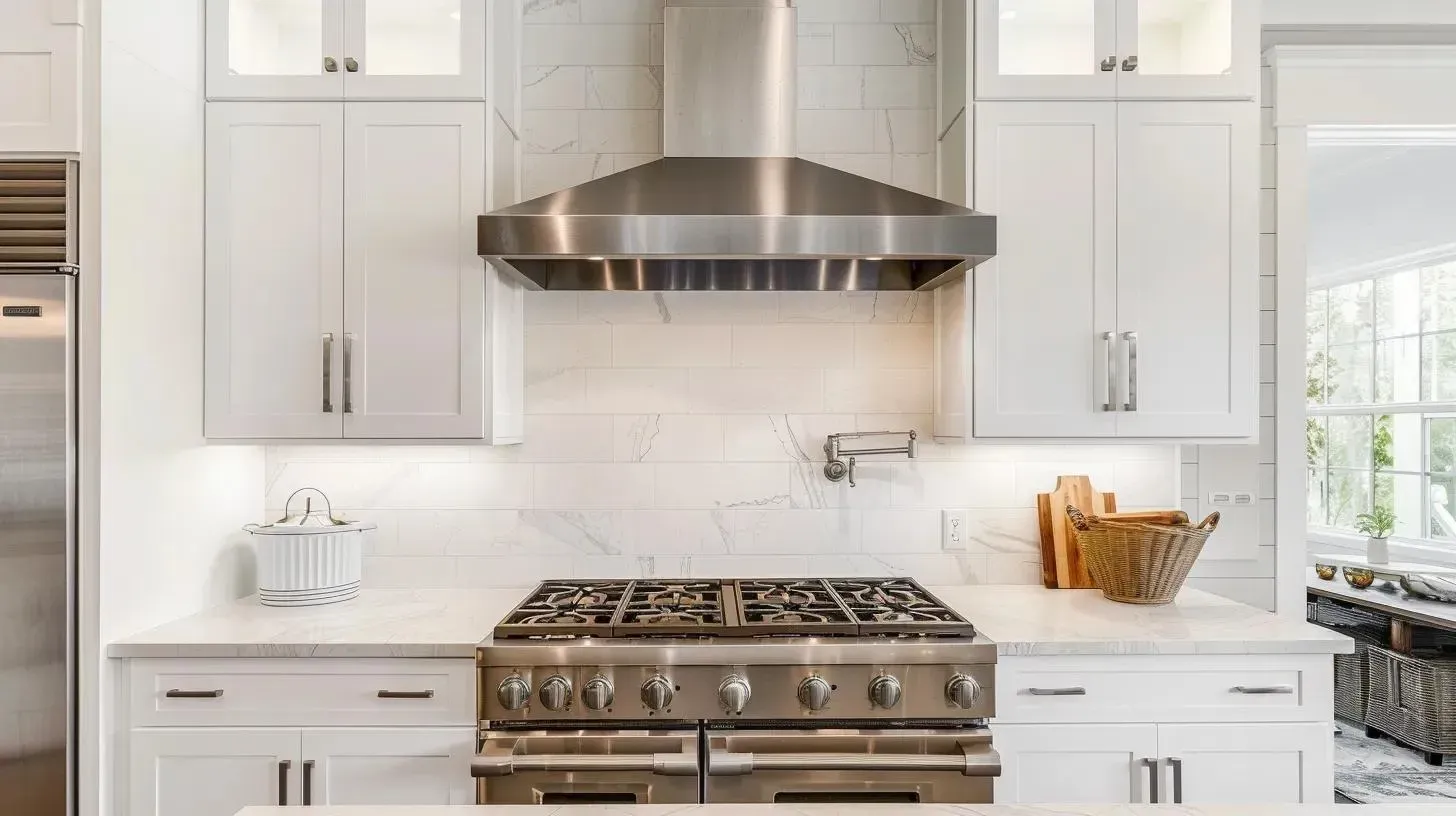
If you’re remodeling a kitchen, range hood ventilation is one of those decisions that feels small—until you cook in the finished space and realize smoke, moisture, and odors aren’t going where you thought. This guide compares ducted vs ductless (recirculating) range hoods so you can choose the right setup for your kitchen and cooking habits.
For a scope-first kitchen remodel in the Denver metro (including venting decisions that affect layout, electrical, and finishes), start here. See “Trustwork Home Renovations and Repairs – Kitchen Remodeling.”
Is a ducted range hood better than ductless?
Most of the time, yes. A ducted hood sends air outside, which is generally the most effective way to remove cooking emissions from the kitchen.
A ductless (recirculating) hood pulls air through filters and sends it back into the room. That can reduce some grease and odors, but it typically does not remove moisture and many cooking pollutants the way exhausting outdoors does.
When does a ductless (recirculating) hood make sense?
A ductless hood makes sense when venting to the outside is genuinely difficult or impossible—common in some condos, apartments, and kitchens far from an exterior wall. In those situations, a ductless hood can still be better than nothing, especially if you pair it with consistent filter maintenance and another way to ventilate during heavy cooking.
Mini-scenario #1: You live in a condo where running new ducting to an exterior wall would require major building approvals. You choose a ductless hood with charcoal filtration, commit to replacing filters on schedule, and make a habit of opening a nearby window or running another exhaust fan during smoky cooking.
What tradeoffs should you compare: air quality, moisture, noise, and maintenance?
The “right” choice depends on what you cook, how often you cook, and what your kitchen can physically support. Use the table below to compare the tradeoffs without getting pulled into brand debates.
| Factor | Ducted (vents outdoors) | Ductless (recirculates) | What to check in your kitchen |
|---|---|---|---|
| Cooking emissions removal | Typically strongest (air leaves the home) | Typically weaker (air stays in the home) | Can you route ducting to an exterior wall/roof? |
| Moisture and heat | Helps remove steam/heat as it exhausts outside | Moisture/heat largely remain indoors | Do you boil/simmer often? Is your kitchen already humid? |
| Odors and grease | Usually better overall | Can reduce odors/grease, depends heavily on filters | Are you willing to replace charcoal filters regularly? |
| Installation complexity | Higher (duct route, wall/roof termination) | Lower (no duct route) | Is there a clean duct path with minimal turns? |
| Ongoing maintenance | Grease filters still need cleaning | Grease + charcoal filters require ongoing upkeep | Who will maintain filters, and how often? |
| Noise experience | Often quieter-feeling (varies by design and install) | Can feel louder because everything is in the room | Will the hood be used daily (noise tolerance matters)? |
Mini-scenario #2: You cook most nights and do a lot of high-heat searing. Your remodel includes moving the range to an exterior wall and adding a straight duct path to the outside. A ducted hood becomes a “quality of life” upgrade you’ll feel every week.
If you choose ducted, what makes a ducted hood work well?
A ducted hood works best when it actually captures the cooking plume and moves it outside efficiently. The biggest performance killers are often installation realities—not the hood itself.
Focus on these practical points:
- Keep the duct route as direct as possible (long, twisty duct runs tend to underperform)
- Avoid exhausting into an attic, crawlspace, or soffit unless your local rules explicitly allow it
- Confirm where the duct terminates and how backdrafting is handled
- Coordinate the hood decision early so cabinets, backsplash, and electrical don’t get “locked in” first
If your remodel changes vent routes late, that often becomes a scope and timeline issue. Use this change-order guide to keep changes documented.
If you choose ductless, how much do filters and habits matter?
They matter a lot. With ductless hoods, your results depend on the filter system and how consistently you maintain it.
Most ductless setups involve:
- A grease filter that catches grease and needs cleaning
- A charcoal (carbon) filter intended to reduce odors, which needs periodic replacement
If you don’t maintain filters, performance drops—sometimes quietly—until you realize your kitchen feels “stuffy” after cooking.
Decision checklist: ducted or ductless for your kitchen?
- Can you realistically route ducting to the outside without major structural headaches?
- Do you cook frequently, fry often, or generate a lot of smoke/steam?
- Is humidity already a problem in your kitchen?
- Will you actually use the hood every time you cook?
- If ductless: are you willing to clean grease filters and replace charcoal filters on schedule?
- Does the duct route (if ducted) stay direct enough to avoid performance loss?
- Are you changing range location, adding a new hood, or altering ducting (possible permits/inspections)?
Venting is one of the behind-the-walls decisions that can affect layout, electrical, cabinets, and schedule. If you want a scope-first plan that calls these dependencies out early, see “Trustwork Home Renovations and Repairs – Kitchen Remodeling.”
Common mistakes and red flags with range hood ventilation
- Choosing ductless when you cook heavily, then expecting it to perform like ducted ventilation
- Installing ducted ventilation but exhausting into an attic/crawlspace instead of outdoors
- Not using the hood consistently (even a good hood doesn’t help if it’s off)
- Treating filter maintenance as optional in a ductless setup
- Waiting to decide ventilation until after cabinets/backsplash are finalized (late changes tend to cascade)
If you’re changing venting routes, confirm whether your scope triggers permits where you live in the Denver metro (jurisdictions vary). See “Denver Kitchen Remodel Permits.”
FAQ: ducted vs ductless range hoods
Is ductless “good enough” for a gas range?
It depends on your cooking style and your ability to ventilate the room other ways. Many indoor air quality resources recommend exhausting cooking emissions outdoors when possible, especially for frequent or heavy cooking.
Does a ductless hood remove moisture from cooking?
Generally, no. Ductless hoods recirculate air back into the kitchen, so steam and heat mostly remain indoors.
If I can’t duct outside, what’s the next-best approach?
Use the best ductless system you can, maintain filters, and increase ventilation during cooking (for example, by opening windows or using another exhaust fan). Your remodel plan should treat this as an intentional decision, not a default.
When should I decide on the hood during a remodel?
Early—before cabinets, electrical, and backsplash plans are finalized. Late ventilation decisions are a common cause of change orders.
Next step
If your remodel includes new ventilation or a range relocation, treating it as an early decision usually saves you time and rework later.
Kitchen remodeling overview (Denver metro).
External references
- Washington State Department of Health — Ventilation While Cooking.
- EPA — Sources of Indoor Particulate Matter (PM).
- Stanford Medicine (LBNL research) — Use your range hood for a healthier home.
- Environmental Health Perspectives (via PubMed Central) — Cooking-related pollutants and ventilation.