Kitchen Cabinets vs Countertops: Which Costs More in a Kitchen Remodel?
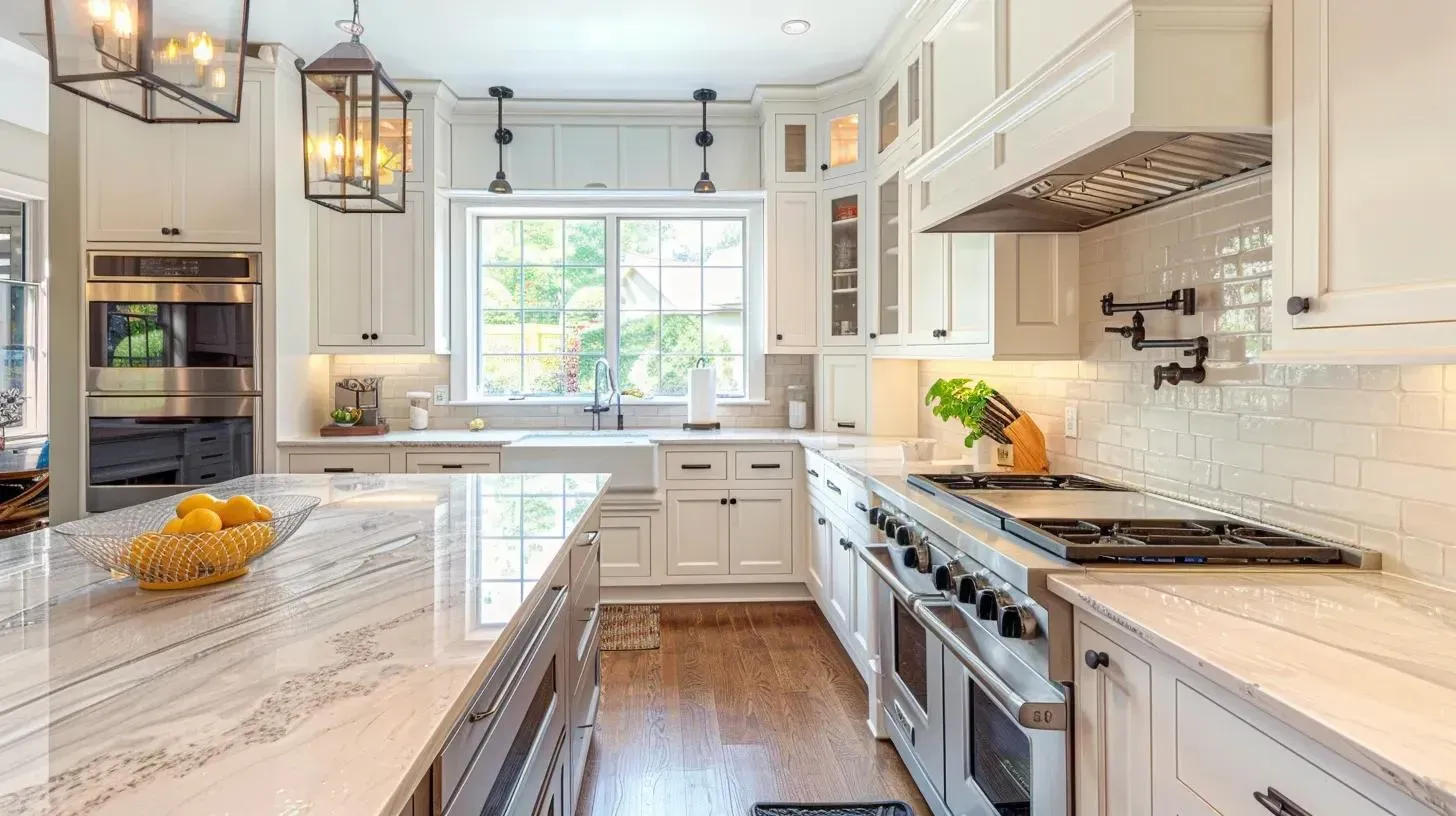
If you’re trying to decide where to allocate budget in a kitchen remodel, the cabinet-and-countertop question comes up fast. In most projects, cabinets are the bigger cost driver, but there are specific situations where countertops can take the lead. This guide explains why, how to spot the exceptions, and how to make smart tradeoffs without creating “regret upgrades.”
If you’re planning a kitchen remodel in the Denver metro and want a scope-first, project-managed approach.
Are cabinets or countertops usually the bigger cost driver?
In most kitchen remodels, cabinets are usually the larger share of the budget because they cover more surface area, require more installation time, and often include storage features and trim details. Industry budgeting worksheets frequently allocate a larger portion to cabinetry and hardware than to countertops as a category.
That doesn’t mean countertops are “small,” though. Countertops can jump quickly with premium materials, complex edges, waterfall panels, multiple slabs, or specialty fabrication.
Why do cabinets often cost more than countertops?
Cabinet costs add up because you’re paying for both a product system (boxes, doors, drawers, hardware, trim, panels) and precision installation (leveling, scribing, alignment, fillers, toe-kicks). Cabinets also influence other parts of the remodel—countertop templating, appliance fit, lighting plans, and finish trim—so they tend to sit closer to the center of the project.
Here are the most common cabinet cost multipliers:
- Customization level: stock vs semi-custom vs custom
- Door/drawer configuration: drawer-heavy layouts and specialty storage features
- Finishing detail: paint-grade perfection, matching panels, decorative trim
- Layout complexity: islands, tall pantry walls, multiple corners, and odd angles
When can countertops cost more than cabinets?
Countertops can take the lead when the material and fabrication scope become the star of the kitchen. This happens most often when you choose high-end stone, large-format surfaces, or advanced fabrication.
Common countertop cost multipliers:
- Premium material selection (and limited-supply colors/patterns)
- More seams and cutouts (multiple runs, big cooktops, farmhouse sinks)
- Complex edges or profiles
- Waterfalls or full-height slab backsplash
- Structural support needs for long overhangs
If your plan is “simple cabinets, statement counters,” it’s completely possible for the countertop portion to rival (or exceed) cabinetry.
How do you decide where to invest: cabinets, countertops, or both?
A good rule is to invest in the component that will be hardest (and most disruptive) to change later.
- Cabinets are disruptive to replace because they touch everything—flooring edges, walls, counters, plumbing/electrical rough-ins, and trim.
- Countertops are easier to swap than cabinets, but still disruptive (sink/faucet disconnects, possible backsplash impact, and downtime).
Decision table: common budget scenarios and the best “focus” choice
| Your situation | Put more budget into cabinets when… | Put more budget into countertops when… | A balanced move that usually works |
|---|---|---|---|
| Layout stays the same | You want better storage and daily function | You mainly want a new look and a durable work surface | Drawer-heavy base cabinets + mid-tier durable counters |
| Existing cabinets are solid | You’re changing cabinet layout or adding storage walls | You’re keeping cabinets and upgrading the surface | Reface/refresh cabinets (if appropriate) + upgrade counters |
| You cook daily and use the counters hard | You need better workflow and organization | You need higher durability and easier maintenance | Prioritize durable counter material + keep cabinet style simple |
| You’re adding an island | You need storage, seating, and clean panel details | You want a statement island surface | Invest in island cabinetry quality; keep perimeter counters simpler |
| You want a “high-end look” on a tighter budget | Cabinet lines/fit/finish must read clean up close | Countertop becomes the visual hero | Clean, simple cabinet fronts + one “hero” counter area |
Mini-scenario #1 (cabinet-led): A homeowner is frustrated by poor storage and awkward base cabinets. They choose a drawer-heavy cabinet plan with a straightforward finish, then pick a durable, mid-tier countertop. The kitchen feels dramatically more functional because the daily “pain points” were solved at the cabinet level.
Mini-scenario #2 (countertop-led): A homeowner’s existing cabinets are in good shape and the layout works. They keep the cabinets, update hardware, and put most of the budget into a premium countertop (plus a clean backsplash). The room looks transformed because the surface change is the primary visual and functional upgrade.
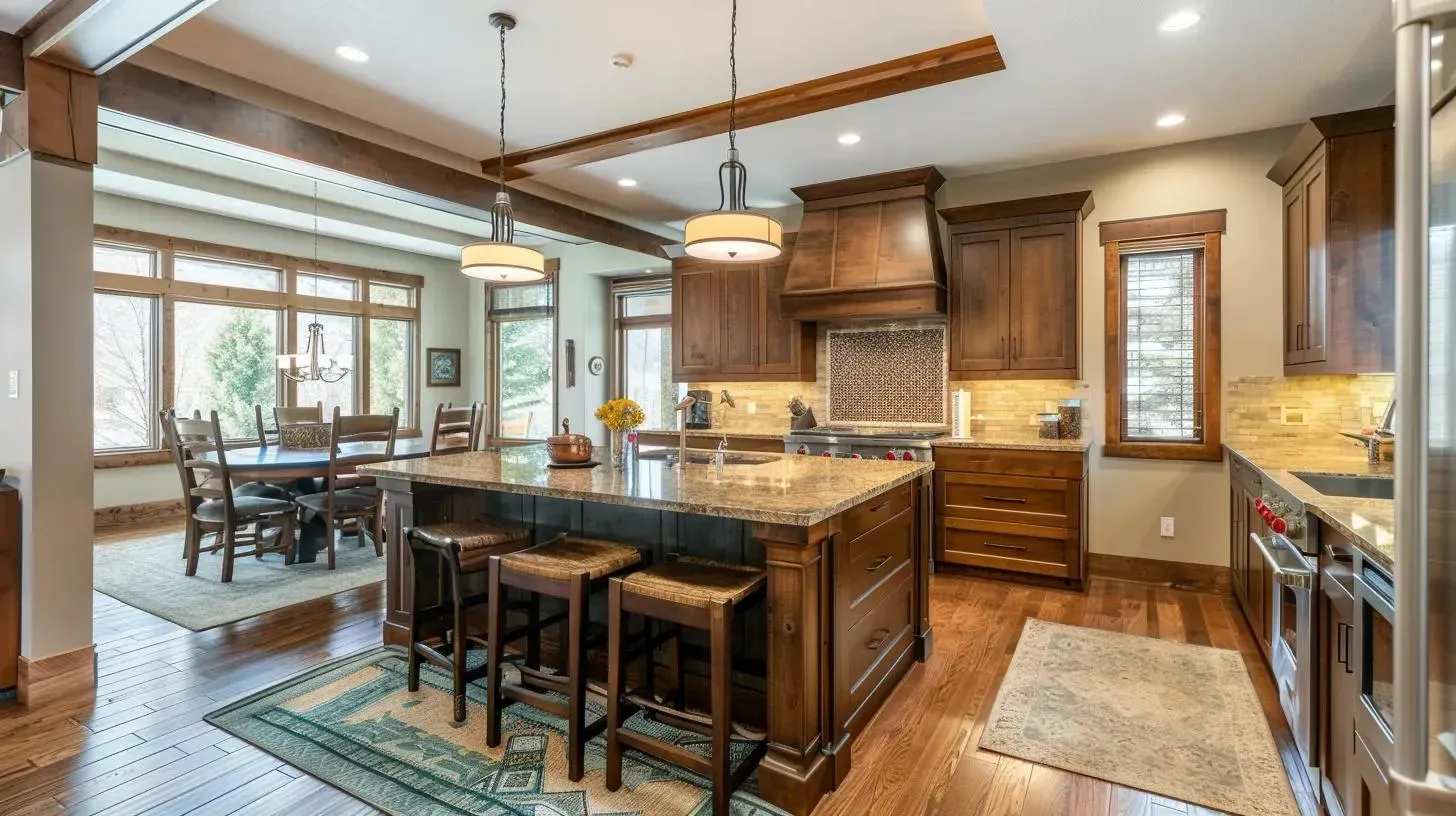
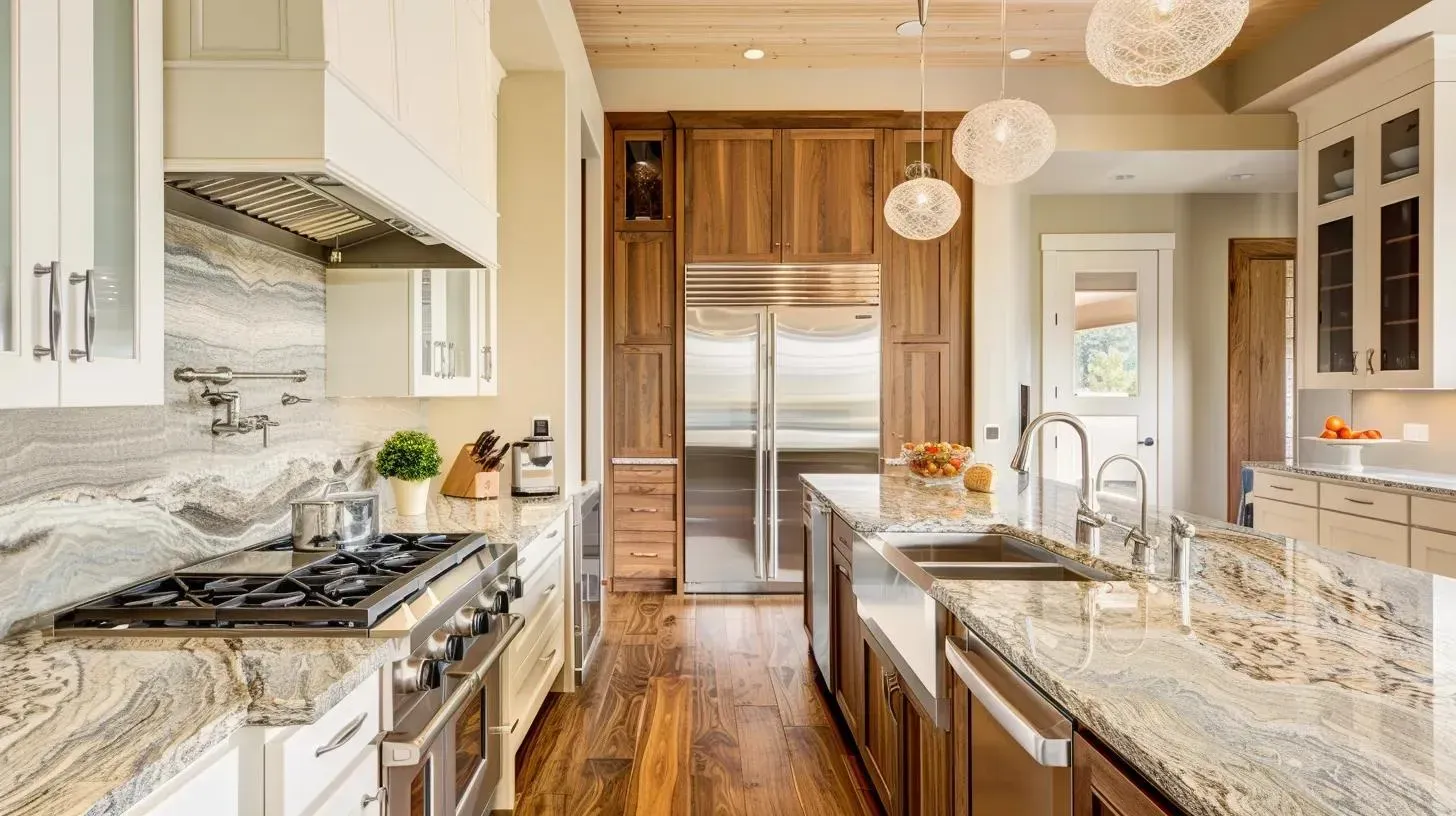
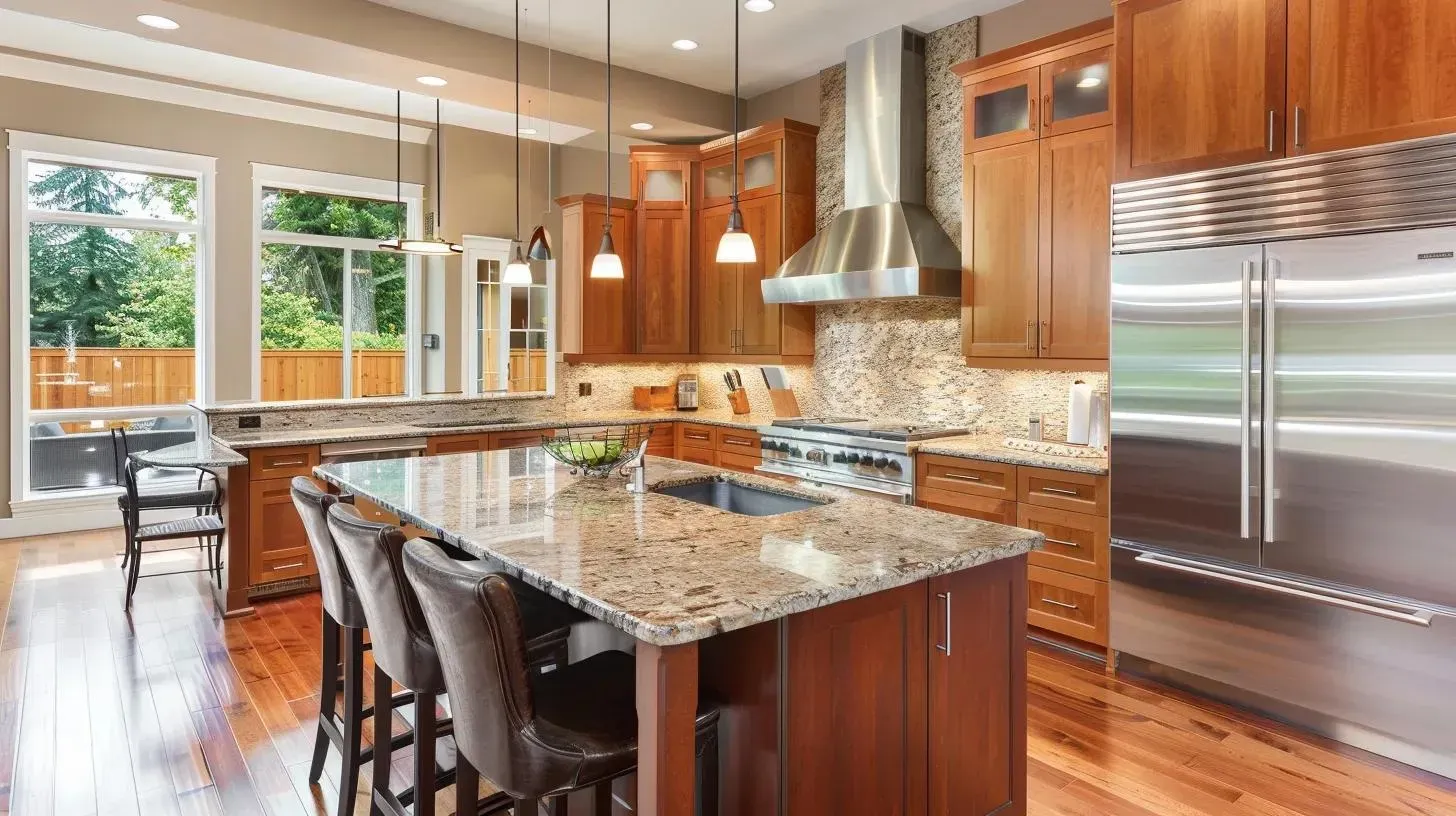
If you want to see how different cabinet/counter priorities look in real finished kitchens, browse the project gallery.
What are smart ways to save without creating “regret upgrades”?
Savings are safest when they don’t compromise durability, fit, or daily usability.
Budget tradeoff checklist (copy/paste)
- Keep the layout the same if possible (moves trigger more trade work)
- Choose simpler cabinet door styles and finishes (clean doesn’t have to be expensive)
- Go drawer-heavy only where it matters (pots/pans, dishes, trash pull-out)
- Limit countertop seams and extras (waterfalls, complex edges) unless they’re must-haves
- Decide if you want one hero surface (island) and keep the rest straightforward
- Lock appliance sizes early so cabinets aren’t redesigned late
- Write down what’s included vs optional so “nice-to-haves” don’t silently expand
Common mistakes and red flags when balancing cabinets and countertops
These are the patterns that usually create budget stress or long-term regret.
- Choosing countertops before cabinet layout is finalized. Templating depends on cabinet placement and leveling.
- Over-spending on a statement counter while living with dysfunctional storage. You’ll notice storage frustration every day.
- Underestimating cabinet installation and trim complexity. The “details” are where cabinet labor grows.
- Adding waterfall edges and slab backsplashes late. These change fabrication scope and can affect the schedule.
- Changing appliance sizes after cabinet decisions. This can force filler panels, reduced clearances, or redesign.
Quick FAQ: cabinets vs countertops cost
Are cabinets always the most expensive part of a kitchen remodel?
Often, yes, but not always. Cabinets are commonly the largest single category, while countertops can take the lead when you choose premium materials and complex fabrication.
If I can only upgrade one, which creates the biggest impact?
If function is the main problem (storage, workflow, organization), cabinets usually deliver the biggest daily-life improvement. If your layout works and cabinets are in good condition, countertops can create the most visible transformation.
Can I upgrade countertops now and cabinets later?
You can, but it’s risky if you expect the cabinet layout or heights to change later. If cabinets are likely to be replaced soon, it’s usually better to plan the full cabinet/counter system together.
References (non-competitive)
- NKBA budgeting worksheet (cabinet vs countertop budget share).
- Remodel budget breakdown context.
- Broader remodel cost context and savings ideas.
Next step
If you’ve clarified whether your remodel is cabinet-led, countertop-led, or balanced, the next step is turning that priority into a clean scope and a realistic plan.
- Kitchen remodeling pillar.
- Estimate request (photos + notes).