Kitchen Remodel Order of Operations: The Correct Sequence (So You Don’t Redo Work)
The “right order” for a kitchen remodel is the sequence that protects finished surfaces, keeps trades from working on top of each other, and prevents rework. This guide focuses on construction order of operations—what typically comes first, what depends on what, and where homeowners should pause to confirm key details. If you want the service overview and a project-managed remodel process in the Denver metro, see “Trustwork Home Renovations and Repairs – Kitchen Remodeling.”
What should be finalized before demolition starts?
Before anything is removed, the correct move is to lock the decisions that affect dimensions and rough-ins. If you demo first and “figure it out later,” you increase the odds of change orders and rework.
Confirm these before demo:
- The layout plan (where cabinets and appliances land)
- Appliance specs (sizes, clearances, venting needs)
- Sink and faucet type (and any accessory requirements)
- The location of major lighting (especially over islands and sinks)
- Any must-keep items (floors, windows, or parts of the layout)
Mini-scenario #1: A homeowner wants to “open it up” but hasn’t decided whether a wall is staying. They pause demo until the layout is confirmed. That one decision prevents a cascade of cabinet redesign and avoids ordering the wrong sizes.
What’s the typical kitchen remodel sequence once construction begins?
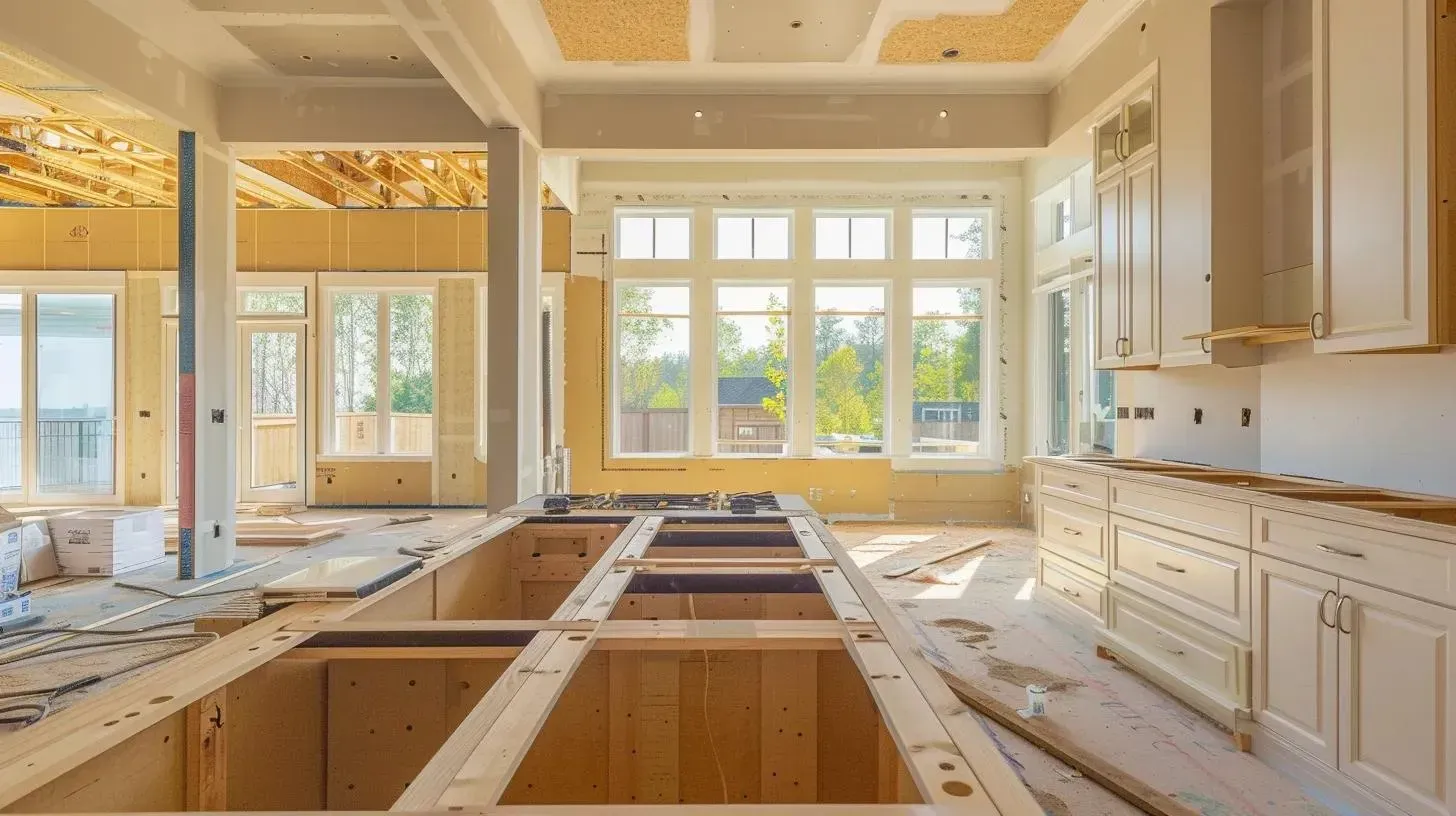
In most kitchens, the correct sequence is: protect the home, remove what’s existing, complete any structural changes, do rough-ins for trades, close up walls, then install the finish elements in an order that avoids damage.
Here’s a practical order of operations you can use as a reference:
Step-by-step order of operations
- Site protection and prep (dust barriers, floor protection, paths)
- Demolition and removal (cabinets, counters, flooring as needed)
- Structural/framing changes (if changing openings, walls, or soffits)
- Rough-in work (electrical, plumbing, ventilation routes)
- Close-up work (drywall, patching, priming)
- Flooring installation (or flooring prep, depending on your plan)
- Cabinet installation
- Countertop templating and install
- Backsplash and wall finish details
- Finish/trim + hardware
- Final connections (fixtures, appliances, electrical finish)
- Punch list + final walkthrough
This is the “clean” sequence most articles converge on, even if they label steps slightly differently. For general step lists, see
“In What Order Do You Remodel a Kitchen” and
“How to Remodel Your Kitchen.”
Where do homeowners get tripped up by sequencing decisions?
The biggest sequencing problems usually happen where one finished surface depends on another being perfectly placed—especially floors, cabinets, and countertops. The right answer depends on what is being replaced and what must stay.
Decision table: common sequencing forks (and what to confirm)
| Sequencing decision point | If you do it first | If you do it later | What you must confirm before choosing |
|---|---|---|---|
| Flooring relative to cabinets | Cleaner floor install, fewer cut lines | Easier cabinet leveling on subfloor | Are you replacing all flooring or patching? Do you need continuous flooring under appliances? |
| Painting/wall finish timing | Cleaner wall finish behind cabinets | Less paint risk during heavy work | Are walls being reworked (drywall/patch)? Will you need multiple rounds of touch-up? |
| Backsplash timing | Protects walls before final hookups | Avoids damage during countertop work | Is countertop install complete and level? Are outlets/under-cabinet lights placed? |
| Appliance delivery/install timing | Confirms fit early | Reduces risk of scratches/damage | Are specs locked and clearances verified? Do you have safe storage if delivered early? |
| Countertop templating | Earlier templating feels fast | Accurate fit after cabinets are set | Are cabinets installed, secured, and leveled before templating? |
Use the table to identify where your remodel’s sequence might need a deliberate decision—not just “the default.”
What should you verify at each major phase to prevent rework?
A remodel stays smooth when you treat each phase like a checkpoint. The goal isn’t perfection—it’s catching misalignments while they’re still easy to fix.
Phase checkpoint checklist
- After demo: confirm hidden constraints (surprises that change the plan)
- After framing/structural work: confirm openings, clearances, and island size
- After rough-ins: confirm outlet locations, lighting placement, plumbing alignment, and vent route
- Before close-up/drywall: take photos of in-wall work for future reference
- After cabinets: confirm cabinets are secured and leveled before templating
- After countertops: confirm seams/cutouts align and edges meet expectations
- Before final walkthrough: confirm fixtures/appliances function and finishes are complete
If you want a professional baseline for planning and clearances (so your checkpoints are grounded), NKBA’s kitchen planning guidelines are a useful reference.
If you’re mapping your remodel sequence and want to align selections with the build order, the kitchen remodeling pillar shows how scope and planning decisions connect to execution.
Which sequencing mistakes cause the most rework?
Most rework comes from installing something “final” before the things that set its position are truly fixed. When that happens, the project may look like it’s moving fast—but it’s quietly building future tear-outs.
Common red flags and mistakes:
- Templating countertops before cabinets are installed and leveled
- Buying appliances before confirming cabinet layout and clearances (or changing appliances after cabinets are finalized)
- Skipping phase checkpoints and discovering misaligned rough-ins after drywall
- Letting multiple trades overlap in a way that damages finished surfaces
- Assuming a “standard order” fits every kitchen without checking your specific constraints
Mini-scenario #2: A couple installs cabinets before confirming the floor plan change around a doorway. The cabinets go in, then the doorway adjustment forces a cabinet shift. They lose time and money because a “phase checkpoint” was skipped at the exact moment it would have been easiest to fix.
Quick FAQ: kitchen remodel order of operations
Do cabinets go in before countertops?
Yes—countertops are typically templated and installed after cabinets are set, secured, and leveled so the fit is accurate.
Should flooring happen before cabinets?
It depends on the flooring plan and what must be continuous. Some projects install flooring first for a cleaner look; others plan flooring around cabinets to reduce waste. What matters is choosing intentionally and confirming how appliances and transitions will be handled.
When should appliances be chosen?
Choose appliance specs early enough that layout, clearances, and rough-ins reflect the actual sizes. Final installation usually happens near the end to reduce damage risk.
Next step
- If you want your kitchen remodel sequence to match your scope and selections—and avoid preventable rework—use “Kitchen Remodeling” to align planning with execution, then submit details through “Estimate Request” with photos and notes.